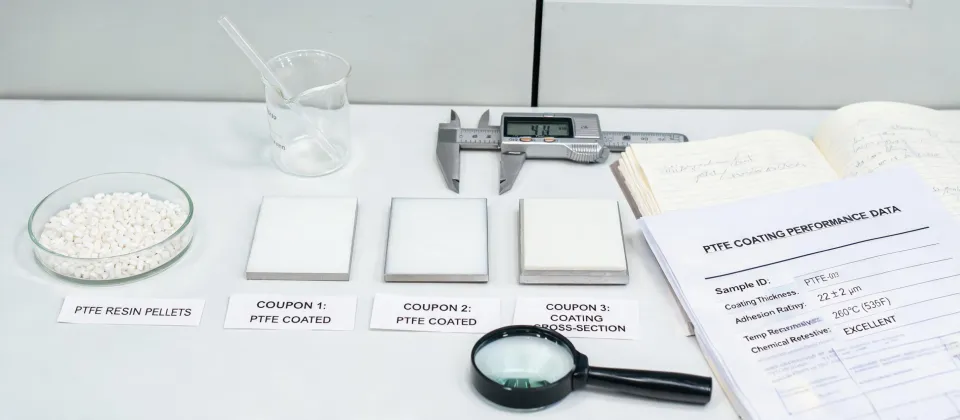
If you’ve ever had to budget for lab consumables, you’ve run into the question: is PTFE plastic actually worth the price tag? The easy answer is “it depends,” but that’s not helpful when you’re staring at a purchase order. Over the past six years of tracking every invoice in our procurement system (our annual consumables budget is just over $180k), I’ve bought PTFE flasks, silicone/PTFE bonded septa, and a bunch of other stuff that claims to be “chemical resistant.” My initial approach was wrong. I thought the cheapest option was always the smartest—it took a few reorders and a communication failure to learn about total cost of ownership.
Here’s what I’ve found. There’s no single “best” choice. Your answer depends on three things: your sample type, your throughput, and how much your time is worth. Let me walk you through the three most common scenarios I see.
Scenario A: The High-Throughput Lab (30+ Samples Per Day)
If you’re processing 30+ samples daily, you’re not worried about saving $2 per vial. You’re worried about downtime. Every time a seal fails or you have to re-run a sample because of contamination, you’re burning real money. In Q2 2024, when we switched from a generic PTFE-coated septum to a high-quality silicone/PTFE bonded variant for our autosampler vials, we saw a measurable drop in carryover.
Why PTFE wins here: The PTFE layer on a bonded septum is inert. It won’t swell or degrade with organic solvents, and it provides a reliable seal. If you’re running UHPLC or GC-MS, even trace contamination can screw your results. A “cheap” silicone-only septum might save you $0.10 per unit, but if you lose one run, that’s $50 in analyst time and reagents gone. Simple.
What I recommend: Go with a silicone/PTFE bonded septum from a reputable supplier (Chemours’ Teflon™ PTFE is a common choice here—more on that below). For PTFE flasks, look for a PTFE resin with good thermal stability. The industry standard for solvent resistance is ASTM D543 (Source: ASTM International), but the real test is your own validation.
Cost reality check: A quality PTFE flask will run you around $150–400 depending on capacity. The cheap option might be $30. But the $30 option will warp if you autoclave it. I’ve seen it happen. That’s $30 down the drain, plus the cost of reordering. A higher-quality PTFE flask lasts 3–5 years under normal use. Do the math.
Scenario B: The Precision-Critical Lab (Trace Analysis)
Everything I’d read about PTFE said it’s the gold standard for inertness. In practice, I found that not all PTFE is created equal. There’s a difference between virgin PTFE from a major producer like Chemours (the company behind the Teflon™ brand) and cheaper, reprocessed grades. That difference matters most when you’re doing trace analysis.
The conventional wisdom is that PTFE is chemically inert. It is—mostly. But the processing aids used in some PTFE grades can leach into your sample. This is where knowing the source of your PTFE matters. If you’re buying a PTFE flask or a septum for high-sensitivity LC-MS work, you want a grade with low extractables. The Teflon™ brand from Chemours is the most widely specified for this reason, and you can verify this through their technical data sheets.
My recommendation for this scenario: Don’t compromise on the PTFE source. Ask your supplier for a certificate of conformance specifying the PTFE grade. For a septum, you want preslit silicone/PTFE bonded septa if you’re using a GC-MS autosampler. The preslit design reduces coring, and the bonded type means the PTFE layer won’t detach and damage your injector. I’ve heard from a colleague who lost a $3,000 injector port to a rogue piece of PTFE. That’s a budget buster.
Cost example: A pack of 100 preslit silicone/PTFE bonded septa costs about $35–60. A cheaper alternative (silicone-only) might be $15. If your injector fails once and costs $300 to repair, you could have bought 10 packs of the good septa. Money.
Scenario C: The Budget-Conscious Lab (Occasional Use, Limited Sample Types)
If you’re running a teaching lab or a quality control line that only tests aqueous samples a few times a week, you can probably get away with less expensive alternatives. The conventional wisdom says premium options always outperform budget ones. My experience suggests otherwise in this specific case.
For PTFE flasks: If you’re not using aggressive solvents, a borosilicate glass flask is cheaper and often good enough. But if you need PTFE for a specific application (say, a digestion flask for HF), then you do need PTFE. In that case, you can look at a lower-cost brand of PTFE (not Teflon™), but be aware that the thermal limits might be slightly lower (around 240°C vs 260°C for virgin Teflon™ PTFE). Check the specs carefully. A 20°C difference could matter.
For silicone/PTFE bonded septa: If your samples are water-based and you’re not doing trace analysis, a high-quality silicone rubber septum is often sufficient. You don’t need the PTFE layer. But if you ever plan to run organics, the septum will swell and you’ll get leaks. Then you’re back to square one.
My advice for this scenario: Buy a small pack of the premium product first. Test it on your most difficult sample. If it works, then evaluate whether the cost difference is justified by your failure rate. I’d also keep a small stock of both types so you can switch when needed.
How to Figure Out Which Scenario You’re In
Here’s a quick self-check. Answer these three questions honestly:
- What are you running? If it’s anything more aggressive than water or dilute buffer, lean toward Scenario A or B.
- How accurate do your results need to be? If you’re doing pass/fail QC with a 10% tolerance, you’re a candidate for Scenario C. If you’re quantifying nanograms per liter, you need Scenario B.
- What’s the cost of a failure? A lost sample isn’t just the sample. It’s the instrument time, the analyst hours, and the delayed report. If a failure costs more than $500, buy the good stuff.
Honestly, most labs I’ve worked with are in Scenario A or B once they add up the total cost. The “cheap” option usually ends up costing more in labor and rework. I learned this the hard way after a task that involved a batch of 200 samples that had to be re-done because of a contaminated septum. We used a no-name brand. Never again.
A final thought on suppliers: When you’re buying PTFE products, look for suppliers who explicitly state the PTFE source. If they just say “PTFE” without naming the resin manufacturer (like Chemours’ Teflon™), ask a question. If they can’t give you a clear answer, that’s a red flag. For bonded septa, confirm the bond is thermal or chemical (not a simple lamination) to avoid delamination issues. Prices as of Q1 2025; always verify current rates with your vendor.
Trust me on this one: the $50 difference per order has saved us way more than that in avoided headaches. And when the CFO asks why the line item for septa went up, you can show them the savings from not re-running samples. That’s a conversation that ends well.
