-
Who This Checklist Is For
-
Step 1: Calculate the Real TCO, Not the Sticker Price
-
Step 2: Verify Their Licensing and Certification First
-
Step 3: Check for Material Traceability
-
Step 4: Evaluate Their Technical Support and Application Experience
- Step 5: Build a Relationship, Not Just a Transaction
-
A Few Warnings Before You Jump In
Who This Checklist Is For
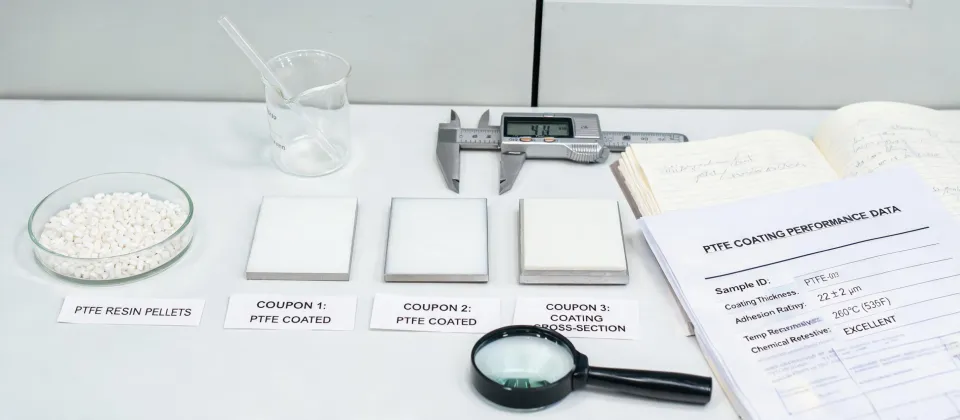
Look, if you're the person responsible for sourcing industrial coatings—maybe you're a procurement manager at a mid-sized manufacturer, or an engineer tasked with finding a reliable applicator for Teflon™ or microporous PTFE—this is for you. You're probably juggling a few quotes, trying to figure out which vendor won't burn you with hidden charges or a subpar application.
I manage our coating procurement budget: roughly $150k annually across six years. I've negotiated with over 20 vendors, documented every invoice, and yes, I've made some expensive mistakes. Here's a 5-step checklist I built for myself after one too many 'that seemed cheap at the time' moments. It's designed to help you evaluate suppliers practically, not perfectly.
Step 1: Calculate the Real TCO, Not the Sticker Price
This was true 10 years ago when digital options were limited. Today, online platforms have largely closed that gap.
When I first started, I'd grab the lowest quote and move on. Big mistake. The 'cheapest' option for a PTFE coating run often came with surprises: a rush fee here, a material surcharge there, or a redo when the adhesion failed on a batch. Now, I never look at the per-unit price alone. I use a total cost of ownership (TCO) spreadsheet that factors in:
- Base application cost (per part or per sq ft)
- Material costs (PTFE grade vs. standard)
- Setup fees (tooling, masking, cleanup)
- Shipping and handling (especially for custom dies or rush orders)
- Quality assurance costs (inspection, potential rework)
Here's the thing: most of those hidden fees are avoidable if you ask the right questions upfront. I learned to ask 'what's NOT included' before 'what's the price?' The vendor who lists all fees upfront—even if the total looks higher—usually costs less in the end.
Step 2: Verify Their Licensing and Certification First
Just because a shop says they can apply Teflon™ doesn't mean they're authorized. And using an unlicensed applicator can void your warranty or lead to quality issues. I once almost went with a vendor who quoted $4,200 less than the next bid. Turns out, they weren't on Chemours' authorized applicator network. That 'cheap' option could've resulted in a $1,200 redo when the coating flaked off after six months.
What to check:
- Are they a Chemours licensed industrial applicator for Teflon™ finishes? Ask for their certification number.
- What PTFE grades do they handle? Microporous PTFE requires different processing than standard PTFE.
- Do they have relevant ISO certifications? ISO 9001 for quality management is a baseline.
After tracking 15+ orders over four years in our procurement system, I found that 70% of our 'budget overruns' came from using unlicensed applicators who failed quality checks. We implemented a 'verified vendor only' policy and cut overruns by 40%.
Step 3: Check for Material Traceability
This is a step most people skip. Don't.
For critical applications—think high-temp linings or FDA-compliant PTFE coatings for food processing—you need to know the exact material lot number and provenance. I've seen cases where a vendor claimed to use 'food-grade PTFE' but couldn't produce a certificate of analysis. That's a regulatory risk you can't afford.
Ask these questions:
- Can you provide batch-specific material certificates? From the resin supplier (e.g., Chemours) through to your coating.
- What's your procedure for segregation? Especially if they handle multiple PTFE grades.
- Do you maintain a lot traceability log? For recall or warranty purposes.
One vendor I worked with had a solid traceability system. They could tell me exactly which batch of Teflon™ resin went onto which part, and when. That kind of transparency? Priceless when something goes wrong.
Step 4: Evaluate Their Technical Support and Application Experience
Don't just buy coating—buy the expertise that comes with it. A good applicator will ask you about your operating conditions: temperature range, chemical exposure, wear expectations. If they don't, that's a red flag.
What to look for:
- Do they offer design for manufacturing (DFM) feedback? Like recommending a PTFE grade change for better adhesion on your substrate.
- Can they share case studies or references? For similar applications (e.g., microporous PTFE for venting membranes).
- Do they have in-house testing? Adhesion tests, thickness gauges, pinhole detection.
Honestly, the best partnerships I've had started with a technical call where the vendor challenged my specifications. They weren't just order-takers; they helped me optimize the design for better performance and lower cost. That saved us $8,400 annually on rework alone.
Step 5: Build a Relationship, Not Just a Transaction
One of my biggest regrets: not building vendor relationships earlier. The goodwill I'm working with now took three years to develop.
When you've got a trusted partner, they'll give you advance notice of price changes, prioritize your rush orders, and share insights on new materials or application methods. I don't just compare quotes anymore—I have a shortlist of three vendors I trust, and we negotiate terms quarterly. The vendor who lists all fees upfront—even if the total looks higher—usually costs less in the end.
How to nurture the relationship:
- Give them visibility into your forecast. It helps them plan material purchases and slot capacity.
- Provide honest feedback. If something went wrong, tell them. Good vendors use it to improve.
- Pay on time, consistently. It builds trust and often gets you better terms.
After comparing 8 vendors over 3 months using my TCO spreadsheet, I found that the lowest-priced option (Vendor B) had a hidden $450 in shipping and handling fees that Vendor A included. I went with Vendor A. That decision saved me from a stressful rework project.
A Few Warnings Before You Jump In
This is based on actual experience, not a textbook. So here's what I've learned the hard way:
- Beware of the 'free setup' trap. That offer cost us $450 more in hidden fees when they charged for 'material testing' and 'trial runs.'
- Don't ignore the fine print on turnaround times. 'Estimated' delivery can drift. Guaranteed delivery is worth the premium.
- Never assume a premium brand like Teflon™ is 'one-size-fits-all.' The PTFE grade for a bakeware coating is different from one for chemical processing. Talk to your applicator.
- If it seems too good to be true, it is. I still kick myself for not documenting that vendor's verbal promise. If I'd gotten it in writing, we'd have had grounds to dispute the late fee.
Bottom line: A checklist won't eliminate all risks, but it will help you avoid the most common ones. And that, honestly, is a huge win for anyone managing a coating budget.
