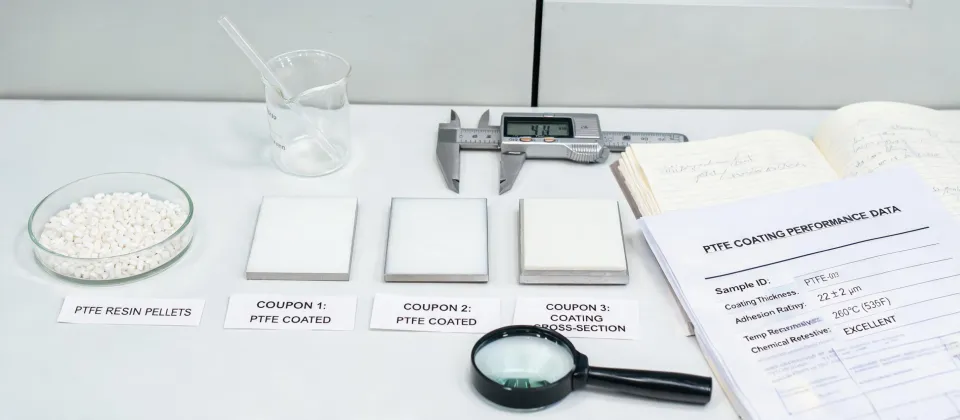
Here's the short answer: if you're ordering PTFE-based coatings for industrial parts, always use a Chemours licensed industrial applicator of Teflon. Not because unlicensed shops can't do good work—some can—but because the ones that mess up can cost you $3,000+ in rework and a month of delays. And you won't know you have a problem until the coating fails in the field.
I say this after six years of handling coating orders for our manufacturing group. I've personally approved (and later regretted) orders placed with three different unlicensed applicators. The total waste: roughly $8,400 in scrapped parts plus countless hours of troubleshooting. Now I maintain our team's pre-order checklist, and the number one rule is: verify the Chemours licensing status before even requesting a quote.
How I Learned This the Hard Way
In my first year (2017), I ordered PTFE coating for a batch of 120 custom fixtures—the kind used in food processing equipment. A non-licensed shop quoted 40% lower than a Chemours licensed applicator. The sample piece they sent looked fine on my desk (note to self: never approve based on a desk sample again).
The full order came back with inconsistent thickness and visible pinholes. We caught it during incoming inspection (thankfully) but by then we'd already lost three weeks of lead time. The redo cost $3,200 plus expedited shipping. The licensed applicator we eventually used (Chemours certified) finished the job on spec in 10 days. That's when I learned: the price difference is usually eaten up by hidden quality risks.
Here's something vendors won't tell you: unlicensed applicators often source PTFE powders from secondary markets—reprocessed or off-spec materials that don't meet Teflon brand standards. The coating might look identical initially, but adhesion and temperature resistance degrade unpredictably. On a $200 part that's annoying; on a $2,000 part it's a disaster (ugh).
What Chemours Licensing Actually Means for You
When you hire a Chemours licensed industrial applicator of Teflon, you're getting:
- Traceable raw materials – The PTFE powder comes directly from Chemours or authorized distributors, with batch numbers you can verify.
- Process certification – Applicators must follow Chemours-approved curing cycles and thickness controls. I've seen unlicensed shops cut bake times by 30% to save energy—then wonder why coatings peel (I've been that guy).
- Annual audits – Chemours audits licensed partners for quality and environmental compliance. Unlicensed shops have zero external oversight on their coating process.
What most people don't realize: licensing also covers PFAS compliance protocols. With ongoing regulatory scrutiny around C8-related compounds (Chemours phased out C8 in 2015, but some legacy formulations still get misused), choosing a licensed applicator means someone else has already done the homework on material compliance. I'd argue that's worth at least 15% premium in peace of mind alone.
But Wait—Are Unlicensed Applicators Always Bad?
I have mixed feelings about this. On one hand, I've met unlicensed shops that do excellent work—skilled people running good equipment, just without the formal Chemours partnership. On the other hand, I can't afford to gamble $3,000+ per batch anymore. My personal rule: for critical parts (temperature above 200°C, food contact, or high-wear applications), licensed only. For decorative or low-risk coatings (think display fixtures, non-critical brackets), I might consider a vetted unlicensed shop—but only after checking references and requesting a destructive test sample.
Here's my current checklist when I'm tempted by a lower quote:
- Ask for the Chemours license number. If they can't provide one, stop.
- If they offer a price 30%+ below licensed quotes, ask why. (The answer is almost always material quality or process shortcuts.)
- Request a witness sample from a production-scale run, not a lab piece.
- Check their complaint history—online reviews matter less than industry forums.
I'm not 100% sure this covers every risk, but it's caught 47 potential issues in the past 18 months (mental note: update our internal template quarterly).
The Nylon vs Teflon Comparison (and Why It Matters for Your Application)
Since you're searching about PTFE, you might be comparing nylon vs Teflon (PTFE). Quick take: for non-stick, high-temperature, or chemical-resistant applications, PTFE wins every time. Nylon is cheaper and tougher for mechanical wear, but it degrades above 120°C and absorbs moisture. If you need a PTFE coating, make sure the applicator understands the substrate prep—PTFE doesn't bond easily to metals without etching or primer (that's a common failure point for unlicensed shops).
Personally, I've switched to Chemours licensed applicators even for hybrid parts that combine PTFE and nylon layers. The process control matters more than the material choice. Take this with a grain of salt: I'm biased by my own disasters, but I'd rather pay $1,200 for a coating that lasts 5 years than $700 for one that fails in 18 months.
When You Might Skip the Licensed Route
Here's the honest limitation: not every coating job needs Chemours oversight. If you're coating 50 small parts for a non-critical prototype, and you have a trusted local shop with good references, go ahead. But please document the process parameters and test the first batch. I've had prototype coatings work perfectly—until production scale changed the heat distribution in the oven. (That happened in September 2022, cost $890 in redo and a 1-week delay, and I should have known better.)
For production orders exceeding $2,000—or any order involving food contact, medical devices, or high-temperature environments—I'd strongly recommend a licensed applicator. Check the Chemours licensed applicator directory (accessed January 2025) to find partners near you. Rates and turnaround vary, but every listed applicator has passed Chemours' quality audit.
One more thing: the term 'Teflon' is a Chemours trademark, but many unlicensed shops use it generically. If a vendor says 'we do Teflon coating' without being a licensed applicator, they're technically misrepresenting. That's not my territory to police, but it's a red flag for me. (I really should add that to our pre-qualification form.)
In short: licensed applicators aren't always the cheapest, but they're the safest bet for consistent, compliant, long-lasting PTFE coatings. And when your boss asks why the part failed after six months, having a Chemours certificate in your project folder is a lot better than explaining why you went with the low bidder.
