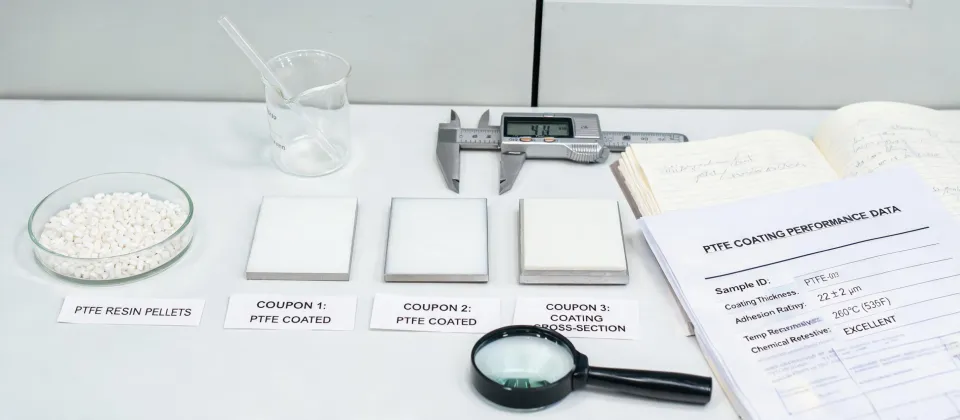
Basically, I'm the guy who handles PTFE orders for a mid-sized industrial component manufacturer. I've been doing this for about six years. In that time, I've personally made enough mistakes to fund a small vacation—and I've documented every single one. After the third rejection in Q1 2024, I created our team's pre-check list. It's saved us an estimated $8,000 in potential rework since then. This is the story of the three biggest failures and the list that finally stopped them.
Mistake #1: The Wrong PTFE Grade for a High-Temp Application
This was accurate as of early 2023. The market changes fast, so verify current material data sheets before ordering. So, I had an order for a batch of machined PTFE parts. The engineer's spec sheet just said "PTFE." I ordered standard PTFE from a non-Chemours source. Seemed fine.
It wasn't. The application involved continuous exposure around 280°C (536°F). Standard PTFE starts to break down around 260°C. We got the parts, installed them, and they failed within a week. $3,200 order, straight to the trash. The redo cost an additional $1,800, plus a two-week delay that pissed off the client.
Looking back, I should have asked: "What's the max continuous service temperature?". At the time, I thought "PTFE = high-temp." It is, but not all PTFE is created equal. A modified PTFE or one with a specific filler might have been the right call. I didn't even check.
Mistake #2: The PTFE Spiral Wound Gasket That Didn't Fit
In September 2022, I got a rush order for a small quantity of PTFE spiral wound gaskets. The client sent a diagram. I glanced at it, saw it was a standard size, and processed it. The gaskets arrived, and they were the wrong thickness.
The diagram showed a gasket that needed to fit into a specific flange groove. The standard gasket thickness was 4.5mm. The groove was designed for 3.2mm. The error was mine. I checked it myself, approved it, and processed it. We caught the error when the client's maintenance team called, confused. $890 wasted for the gaskets plus a one-week delay. The embarrassment was worse.
That's when I learned: never assume a diagram is complete. I now always ask for the flange standard (ASME B16.5, DIN, etc.) and confirm the groove depth.
Mistake #3: The Wrong PTFE Surface Finish for a Seal Application
This is the one that made me create the checklist. In early 2024, we had a large order for PTFE o-rings and seals. The spec called for a "smooth surface." I approved a standard machined finish. The parts worked, but the client's engineer was furious. They needed a specific surface roughness (Ra value) to ensure a proper seal in a high-pressure system. The standard finish was too fine, leading to potential blow-by.
We ended up re-machining all 150 pieces with a modified process. That cost us about $1,200 in labor and another week of delay. The client was unhappy. The lesson: "Smooth" is subjective. Always get the Ra value in writing.
The 5-Point Pre-Order Checklist (For PTFE & Fluoropolymers)
After Mistake #3, I sat down and wrote out a list. It's been through two revisions. Here's the current version. I run this on every single PTFE order now, whether it's a machined part, a gasket, a monofilament, or a coating.
Point 1: Confirm the Exact PTFE Grade and Filler
The Question: Is it virgin PTFE, reprocessed, or filled? What filler? (e.g., glass, carbon, graphite, bronze).
Why: Virgin PTFE is great for chemical resistance, but it's soft. Filled versions improve wear resistance and creep resistance for seals and bearings.
How to Verify: Reference the manufacturer's datasheet (e.g., from Chemours for Teflon™ PTFE).
Point 2: Define the Operating Temperature Range (High and Low)
The Question: What is the minimum and maximum continuous service temperature? Are there transient spikes?
Why: Standard PTFE is good from -200°C to +260°C. Modified PTFEs can handle higher temps, but will be more expensive and have different properties.
How to Verify: This data is in the technical datasheet.
Point 3: Get the Surface Finish Tolerance (Ra Value)
The Question: What's the required surface roughness? (e.g., Ra 0.8μm, Ra 1.6μm, or just machined).
Why: This is critical for seals, sliding bearings, and press-fit parts. The finish affects friction, wear, and sealing ability.
How to Verify: Request the spec from the partner's team or look for it on the engineering drawing.
Point 4: Verify the Dimensional Standards for Fittings and Gaskets
The Question: Is the part designed to a standard (ASME, DIN, JIS)? What are the flange O.D., I.D., and thickness?
Why: A 'standard' gasket can have different dimensions depending on the flange standard in use. A 150mm flange can be DIN or ASME, and they are not the same.
How to Verify: Ask for the flange standard number. Use a template or a gauge if possible.
Point 5: Clarify the Application & Environmental Exposure
The Question: Will the part be exposed to chemicals, UV, steam, or vacuum? Is it for static or dynamic use?
Why: PTFE is chemically inert, but fillers can react. High-energy radiation can degrade it. Vacuum applications require specific outgassing properties.
How to Verify: Review the operating conditions and check the material's chemical compatibility chart.
Using This For Your Orders
I know this list looks a bit long. But honestly, it takes maybe five minutes to run through. The return on investment is insane. We've caught 47 potential errors using this checklist in the past 18 months. That's 47 orders that didn't get returned, 47 clients that didn't get frustrated, and about $8,000 in potential rework costs that we avoided.
It's not a perfect system, but it's the best cheap insurance I know. If you're ordering PTFE, especially from a Chemours licensed applicator or a specialized fabricator, print this list out. Tape it to your wall. It'll save you from the kind of mistakes I made.
