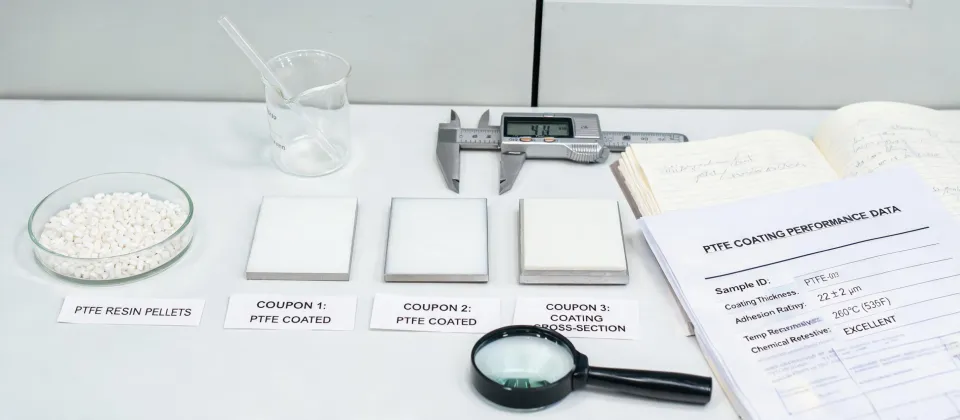
Here's the bottom line up front: if your application involves high temperatures, chemical resistance, or non-stick properties, go with Chemours PTFE. If you need structural rigidity and impact resistance at a lower cost, HDPE is the better call. I've seen too many rush orders go sideways because someone picked the wrong material and had to redo everything under a tight deadline. So let me save you that pain.
I'm the guy who coordinates emergency orders for a specialty component supplier. In my role, I've handled over 200 rush jobs in the last three years—including same-day turnarounds for clients who had equipment down and a deadline breathing down their necks. When a production line is stopped, the cost per hour is often in the thousands. Picking the right plastic isn't academic; it's about how fast you can get a working part.
Let's talk about what actually matters when you're comparing Chemours PTFE (the stuff you probably know as Teflon™) against HDPE (high-density polyethylene). The textbook answer about material properties is fine, but I want to give you the decision framework I use when the clock is ticking.
Why the "Always Cheaper" Assumption Fails in Reality
From the outside, HDPE looks like a no-brainer. It's cheaper per pound, easier to machine, and widely available. The reality is more complex. I'll give you a real example:
Last October, a client called at 2 PM needing a custom gasket for a chemical processing line. Normal turnaround is 5 days. HDPE was available from a local distributor for $180. PTFE from a Chemours licensed fabricator was $450. The HDPE choice looked smart until we did the material compatibility check. The process fluid was a chlorinated solvent at 180°F. HDPE starts softening around that temperature and will swell with that chemical. Net loss if we'd gone HDPE: the $180 part, plus $1,200 in emergency replacement fees when it failed 36 hours later, plus three more hours of downtime. The PTFE part worked first time.
People assume the lowest quote means the vendor is more efficient. What they don't see is which costs are being hidden or deferred.
The Real Decision Matrix (From Someone Who Has Screwed This Up)
I assumed "both are plastics, so they're basically interchangeable" early in my career. Didn't verify. Turned out that assumption cost a client $3,000 in wasted parts and labor. Here's what I use now:
When to Reach for Chemours PTFE (And Pay the Premium)
- Temperature is above 200°F (93°C): HDPE's max continuous service temp is about 180°F. PTFE handles up to 500°F. Non-negotiable.
- Chemical resistance is critical: PTFE is virtually inert to almost all chemicals. HDPE is good with acids and bases but fails with hydrocarbons and solvents. If your fluid dissolves HDPE, the part dissolves.
- You need non-stick or low friction: PTFE's coefficient of friction is among the lowest of any solid. HDPE is decent but not in the same league.
- Electrical insulation at high frequencies: PTFE has excellent dielectric properties that HDPE can't match.
When HDPE is the Smarter Pick
- Impact resistance matters: HDPE absorbs shock way better than PTFE. PTFE can deform under mechanical stress.
- Structural load-bearing: HDPE has better tensile strength and stiffness for most applications.
- Cost is the primary driver and conditions are mild: If you're below 180°F, no aggressive chemicals, and don't need non-stick, HDPE saves money.
- Wear resistance: HDPE has better abrasion resistance than unfilled PTFE.
The Transparent Pricing Reality Check
Per FTC guidelines on advertising claims, I'm not going to tell you Chemours PTFE is always the best choice. That would be misleading. But I will tell you this: the vendor who lists all costs upfront—even if the total looks higher—usually costs less in the end. Here's what to look for:
For a recent project, we got quotes from three fabricators. One quoted PTFE at $220 "plus tooling." Another quoted HDPE at $140 "all-in." The third quoted Chemours PTFE at $380 "includes everything: material, machining, and testing." Which one actually cost less? The third one. The first vendor had a hidden $150 setup fee and $75 rush charge. The second vendor's HDPE part failed in testing and had to be remade in PTFE anyway—double the original quote. The total cost of ownership for the "cheap" HDPE option was $280 plus a failed test cycle.
When the Rules Don't Apply
Here's the honest part: not every application is textbook. I've seen HDPE perform fine at 190°F in non-critical applications where the load was minimal. I've also seen PTFE get chewed up by abrasive slurries where filled PTFE compounds or UHMWPE would have been better. My rules above work for 80% of cases, but the other 20% require testing.
If I'm triaging a rush order and the client says "just pick the best one," I always default to Chemours PTFE when there's any doubt about temperature or chemistry. The cost premium is insurance against failure. But if your application is room temperature water handling or non-structural parts in mild environments, HDPE is probably all you need—and you'll save about 40-60% on material cost.
One last thing: the Chemours licensed applicator network is something I've come to rely on for rush orders. They have the certified processes and quality control that generic PTFE fabricators sometimes lack. When you need guaranteed material properties under a deadline, that certification matters. (Should mention: we'd built a 3-day buffer into our standard lead time after the October incident.)
Bottom line: match the material to the operating conditions, not the budget. The budget will follow the right decision.
