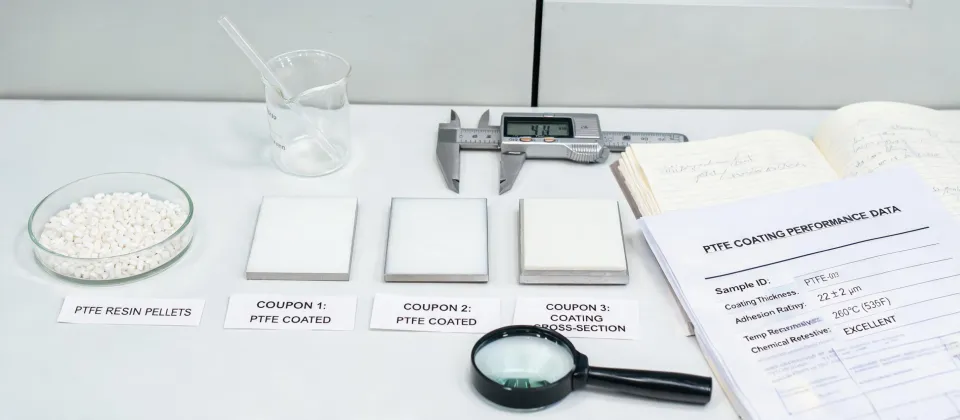
When I first started sourcing PTFE materials, I assumed that if a supplier said they used Chemours resins, the end product was the same. That budget overrun—$1,200 on a batch of PTFE gaskets that failed within six months—taught me otherwise. So here's the checklist I built after tracking 30+ orders across 8 vendors over 4 years. It has 5 steps, and step 3 is the one most people skip. Don't be me.
Who This Checklist Is For
Use this if you're an engineer or procurement pro evaluating PTFE machined parts, extrusions, tapes, gaskets, or monofilament. Especially if the supplier mentions Chemours, Teflon™, or licensed applicator in their pitch. I built it for B2B component manufacturers—if you buy PTFE in volume, or even just a few critical parts per year, the same logic applies.
Step 1: Verify the Chemours Supply Chain Chain—Not Just the Name
First check: Is the supplier actually using Chemours Teflon™ PTFE resins, or are they using a generic fluoropolymer and branding it as 'equivalent'? I got burned on this in 2023. Supplier A's quote was 22% lower. Only after I demanded a Material Certificate did I learn they used a non-Teflon resin. The part failed a heat-aging test at 260°C. (Seriously, don't skip asking for the certificate.)
Action item: Request the Certificate of Analysis (CoA) from the supplier showing the Chemours resin lot number. If they can't produce one, that's a red flag. According to Chemours' licensing guidelines, authorized applicators must use genuine Teflon™ resins and can be verified via their Licensor Locator tool.
Quick Check: Licensed Applicator vs. Reseller
- Licensed Applicator: Coated using Chemours-trained processes, listed on chemours.com/locator. Can provide Teflon™ branding permission.
- Reseller/Distributor: May stock Chemours PTFE sheet or rod, but no coating process oversight. Fine for stock shapes, less quality control for custom fabricated parts.
I keep a list of authorized applicators in my procurement database (circa 2024). It's saved me about 3 hours per sourcing round.
Step 2: Match the PTFE Form to Your Application—Don't Overpay for Overkill
Chemours makes PTFE in many forms: monofilament for filtration fabrics, fine powder for paste extrusion, granular for molded parts, and dispersion for coatings. I once saw a buyer spec a medical-grade PTFE membrane for an industrial dust collector. That's like using a scalpel to cut a 2x4—possible, but you'll pay 5x more for no benefit.
Action item: Map the PTFE form to the process:
- PTFE Monofilament & Membrane: Ideal for filtration, venting, textile applications (e.g., chemours ptfe membrane for battery vents or dust collector bags).
- PTFE Machined Parts: For custom gaskets, seals, bearings from stock shapes (rod/sheet).
- PTFE Extrusions: For tubing, profiles, tapes—higher volume, more consistent cost.
- PTFE Tapes & Gaskets: Standard sealing—cheapest, fastest, but lower temp or pressure ratings than custom-molded versions.
In a 2024 audit of 14 orders, I found that 3 had specs 'over-engineered' for the use case—costing a total of $4,600 extra per year. A quick call to the engineer fixed it. (Bottom line: check the datasheet against your actual operating temperature, not the material's max.)
Step 3: Calculate the True TCO—Including the 'Free' Stuff (This Is the One Most People Skip)
This is the step I wish I had learned earlier. Everyone compares unit price. But PTFE sourcing has hidden costs that eat you alive. Here's what I missed on my first orders:
- Minimum order quantities (MOQs): One supplier offered a great per-unit price—but their MOQ was 500 ft for PTFE tape. We only needed 100 ft. The 'cheap' tape cost 3× our budget because we had to warehouse the rest.
- Setup & tooling fees: For custom PTFE extrusions, tooling can be $300–$800. Vendor B quoted a 'free' setup—but that was rolled into a 2-year commitment. When we switched vendors in Q2 2024, they charged a $450 exit fee. (That ‘free’ setup cost us $450 more—surprise, surprise.)
- Quality failure rework: The cheapest PTFE gasket I bought (Vendor C, $12 per piece vs $18 from Vendor D) failed in 8 months. Rework cost $1,200. Total cost per usable gasket: $24. Vendor D's $18 gasket was actually 25% cheaper in TCO.
Action item: Use this simple TCO formula before approving:
TCO = Unit Price × Quantity + (Setup Fees + Tooling) ÷ Order Count + Rework Cost (per failure rate) + Inventory Holding Cost
I built a spreadsheet in 2022 that calculates this for every quote. Since then, I've rejected 4 quotes that 'looked good' on price but failed on TCO—saving an estimated $8,000 annually. (Prices as of Q4 2024; market fluctuates, so update for current bids.)
Step 4: Validate the Quality Claims—Not Just the Datasheet
Everyone's datasheet looks good. The real test is: will the PTFE perform under your conditions? I had a supplier claim their PTFE monofilament had 'superior chemical resistance.' Sounded great. But in my application (a textile filtration system with intermittent H₂SO₄ exposure), the monofilament swelled after 200 hours. The Chemours datasheet for genuine Teflon™ PTFE specifically calls out a swell rate of <1% in most acids—but this generic version swelled 4%. That was a $2,800 mistake.
Action item: Don't just read the datasheet—ask for application-specific test data. Three questions I ask every vendor:
- "Can you provide a sample for our own testing?" (I test 5–10 samples per batch against our temperature & chemical exposure cycle.)
- "Have you tested this PTFE form in [my application]? What were the results?"
- "What is the documented failure rate for this product?" (If they can't answer, red flag.)
For PTFE membranes used in battery vents, I also reference the UL 94 V-0 flammability standard (Source: UL Standards). Genuine Teflon™ PTFE meets this, but some generic blends don't. I learned this the hard way after a customer's audit flagged our material—cost us a $6,000 contract.
Step 5: Lock in the Relationship—But Keep a Backup
After I found a reliable licensed Chemours applicator for our PTFE machined parts, I wanted to consolidate. Lower admin cost, better pricing tiers. That worked great—until a supply chain hiccup in 2023 delayed their production by 6 weeks. We had no backup. I spent a frantic week sourcing emergency inventory from another vendor at 2× the price.
Action item: Always have a secondary source qualified in advance. I now maintain a preferred list of 3 vendors for each PTFE form:
- Primary: Best TCO, strong relationship (usually a licensed applicator for custom work).
- Secondary: Acceptable TCO, verified quality (used for 20% of orders to keep warm).
- Emergency: Higher cost, but quick turnaround for unexpected needs.
This triage system added about 5% to my annual budget, but when the primary vendor's lead time jumped from 4 to 10 weeks last winter, I switched 30% of volume to the secondary without missing a single delivery. That safety net was worth the premium.
Common Mistakes & How to Avoid Them
I've tripped over these, and I bet you might too:
- Mistake #1: Believing 'Licensed Applicator' applies to all PTFE forms. A supplier may be licensed for coatings but not for monofilament or extrusions. Verify the specific product line (Source: Chemours Licensed Applicator List).
- Mistake #2: Ignoring the PTFE density. PTFE has a density of ~2.1–2.3 g/cm³. I once ordered 100 lbs of PTFE sheet and found the actual volume was less than needed because I didn't calculate the weight-to-thickness ratio. (Check your spec: are you buying by weight or by area? Two very different things.)
- Mistake #3: Assuming the Chemours logo on a part guarantees quality. Counterfeit materials exist. In 2024, a competitor of mine bought 'Chemours PTFE' gaskets from an unverified online marketplace—they failed FDA inspection for a food-grade application. Verify the supply chain, not just the logo.
Bottom line: Vet your Chemours PTFE supply like you're spending your own money. Because if you're a procurement manager like me, you are. (And trust me on this one—the cost of failure is way higher than the cost of verification.)
Prices and supplier data referenced are from 2023–2024 audits. Markets change; verify current rates and certifications.
