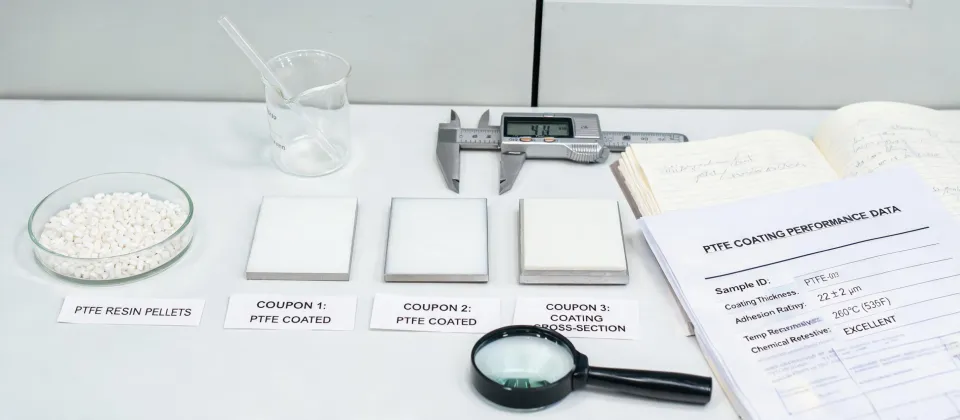
When I first started sourcing PTFE plastics for our components, I assumed that any PTFE was essentially the same thing. I mean, it's all polytetrafluoroethylene, right? The chemical formula is the same, so the performance must be too.
That assumption cost me $3,200 in Q1 2024 and a three-week production delay. I'm sharing this to hopefully prevent you from making the same mistake I did, especially when it comes to specifying materials for something like a valve where the choice between a Chemours Teflon™ coating and a generic PTFE can make or break your application.
Why This Comparison Matters: The PTFE vs. Silicone Trap
Before I walk you through the specific differences between Chemours' offerings and generic materials, I need to clarify a common point of confusion. More often than not, when an engineer asks me about PTFE vs. silicone, they are really comparing two different worlds.
Silicone is an elastomer—it's flexible, good for seals and gaskets. PTFE, especially in its industrial form like Chemours Teflon™ resins, is a rigid, high-performance plastic. They aren't direct substitutes. But I see the comparison pop up because both can handle high temperatures and chemical exposure. The real decision isn't PTFE vs. silicone; it's which grade of PTFE you need. And that's where I went wrong.
Dimension 1: Material Purity and Consistency (The Coating vs. Stock Issue)
My costly mistake involved a batch of PTFE valves. I needed a specific non-stick, chemically inert interior. I found a supplier offering "PTFE coatings" at a bargain price. I assumed it was a Teflon™-equivalent. It wasn't.
The Chemours Reality:
Chemours Teflon™ coatings are formulated to a precise standard. As a licensed industrial applicator for their coatings, we follow a strict process. The pre-treatment, the application temperature, the layer thickness—it's all tightly controlled. This ensures the coating exhibits the exact non-stick and low-friction properties you expect. When a spec calls for a Teflon™ coating, you're buying a system, not just a chemical.
The Generic Reality:
The cheaper valves I bought had a generic PTFE coating. It looked okay in the box. But when we tested it, the chemical resistance was way below spec. The coating was thinner and had micro-pores. In a harsh chemical flow application, the fluid penetrated the coating and attacked the metal valve body underneath. A classic rookie mistake, and one I documented in my error log for future reference.
"The vendor who said 'this isn't our strength—here's who does it better' earned my trust for everything else." - A lesson I learned from my own failure.
Dimension 2: Form and Usability (PTFE Plastics vs. Coatings)
Another dimension where people trip up is confusing PTFE plastics (like sheets, rods, or monofilament) with PTFE coatings. Chemours supplies both, but they serve different purposes.
PTFE Plastics (Machined Parts & Extrusions):
If you need a solid gasket or a machined part, you're working with a PTFE resin. Chemours Teflon™ grades are known for their consistent density and low outgassing. I've seen cheap PTFE sheet stock that delaminates under pressure. It's not the polymer itself that's bad; it's the filler content or the sintering process used by a less reputable manufacturer. You can find high-quality generic PTFE for stock shapes, but you have to vet the supply chain carefully.
PTFE Coatings (Valves & Metal Parts):
For a Teflon™ valve, the coating is a liquid that is applied and then baked onto the metal. The key differentiator is the adhesion and the film integrity. A generic coating might fail at the adhesion level, leading to flaking. A Chemours Teflon™ coating, when applied correctly by a licensed applicator, creates a near-molecular bond to the substrate. If someone offers a generic coating, ask for their adhesion test data and PTFE outgassing specs. If they don't have it, walk away.
Dimension 3: The Supply Chain and Support Factor
You can't talk about Chemours without discussing the brand. The Teflon™ name comes with a support ecosystem. When I screwed up my order, I called my Chemours distributor. They helped me track down the right specification for my application.
The Chemours Ecosystem:
If you're buying Chemours Teflon™ coatings, you are often buying a service from a licensed applicator. This audits your process. If the coating fails due to a process issue, the applicator is responsible. It's a single point of accountability. For PTFE monofilament or machined parts, the brand gives you a baseline for quality consistency across batches.
The Generic Alternative:
With generic PTFE, you're betting on the individual manufacturer. I have a list of decent generic suppliers for non-critical applications (like low-temperature packing and gaskets). But for a critical PTFE valve handling a hazardous chemical? I'm sticking with a specified Teflon™ coating. The cost of a $3,200 mistake taught me that the cost of the generic alternative isn't the unit price; it's the potential failure cost.
So, What Should You Choose?
To make this practical, here's how I now make the call, based on the scars from my $3,200 mistake:
- Choose Chemours Teflon™ (or a certified brand) when:
- You need a proven, documented coating for chemical or food contact applications.
- Failure isn't an option. Think medical devices, aerospace, or critical chemical processing valves.
- You need a single-source warranty for performance. The price includes the traceability.
- Consider generic PTFE plastics when:
- You need a stock shape (sheet, tube, rod) for a non-structural, non-critical part.
- Your requirement is for basic PTFE extrusions with standard tolerances.
- You have an in-house testing lab to verify the material properties.
Bottom line: The difference between Chemours Teflon™ and generic PTFE is the difference between buying a verified system and hoping for the best. For PTFE vs. silicone, just remember they're different material classes. But for PTFE vs. PTFE? Don't learn the hard way like I did. The value isn't in the price of the resin; it's in the performance of the final part.
Prices for Teflon™ coatings vary widely based on application complexity. In January 2025, a simple valve coating job might run $50-150 per valve, while a generic coating might be half that. Verify current rates and always ask for test data.
