The Invoice That Changed My Mind
It was a Tuesday morning in Q3 2024 when the finance team flagged a $2,400 invoice from a new vendor. I'd ordered what I thought were standard PTFE filter bags—a common line item for our decontamination unit on a 400-person industrial site. The price was great. But the invoice was handwritten on a receipt pad, and our accounting system couldn't process it. Finance rejected the expense report. I ended up eating that cost out of the department budget.
That's when I learned my first real lesson about industrial filtration: price is the visible part of the iceberg. Everything else—spec compliance, delivery reliability, proper paperwork—is below the waterline. And that's what eventually led me back to specifying Chemours for our PTFE bags.
Background: The State of Our Filtration Sourcing
Before that incident, I managed orders for roughly $150,000 annually across 8 vendors for various MRO supplies. PTFE bags were about $18,000 of that—not the biggest line item, but critical for uptime. Our engineers had originally spec'd out a specific grade of PTFE filter media for high-temperature gas filtration. But over time, procurement had drifted toward cheaper alternatives. The reasoning was simple: a bag is a bag, right? Wrong.
When I took over purchasing in late 2022, I inherited this legacy of vendor consolidation. We were processing 60-80 orders annually, and filtration was always a headache. The bags from our cheapest supplier had a failure rate of about 12% in the first 6 months. But the price differential was 22% below the premium option. On paper, it looked like a win. In practice, it meant more changeouts, more downtime, and more angry calls from the plant manager.
The Moment of Truth: A Side-by-Side Comparison
After the invoice fiasco, I decided to run a proper comparison. I ordered from three suppliers for a pilot run on one filtration unit. The contenders: a no-name importer, a mid-tier brand, and a Chemours-authorized manufacturer.
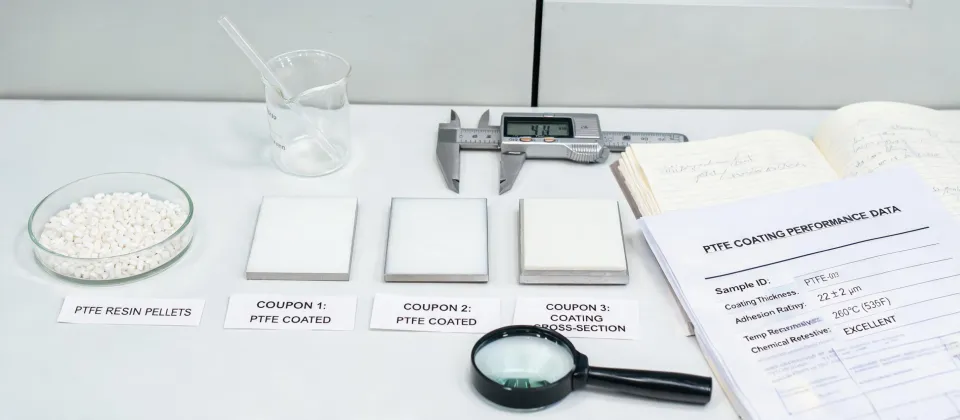
When I lined up the three samples side by side, the differences were obvious. The Chemours PTFE fabric didn't just look different—the weave density was visibly tighter. The mid-tier bag had inconsistent fiber distribution. And the cheap one? It felt like it might hold up for a light particle load, but our operations run 24/7 with aggressive chemical exposure.
Seeing our Q3 and Q4 results side by side—same filtration unit, different bag specs—I finally understood why the details matter so much. The Chemours-sourced bags showed >98% filtration efficiency after 6 months. The cheap ones were at 84% in the same timeframe.
What I Learned About PTFE Filter Bags
Here's the thing about PTFE bags: they're not a commodity purchase. At least, not if you're using them for anything beyond basic dust collection. The resin grade, the fiber processing, the fabric construction—all of it affects performance.
Chemours doesn't manufacture the bags themselves. They produce the PTFE resin and fiber. But the manufacturers who are licensed to use Chemours® raw materials tend to have better quality control. It's basically a shortcut to a higher standard. Three things I now verify before ordering:
- Resin traceability. Can the bag manufacturer prove the PTFE source? If not, pass.
- Fabric weight and tensile strength. Cheap bags save on material. You feel it in the handling.
- Thermal stability testing. For high-temp applications, this is non-negotiable.
Honestly, I wasn't expecting the difference to be this stark. I figured all PTFE was basically the same—it's the same polymer chain, right? Turns out, the processing matters enormously. Fiber diameter distribution, sintering quality, surface treatment—these variables separate a 12-month bag from a 6-month bag.
The Numbers That Made Me Switch
Based on our pilot run data (which I tracked in a spreadsheet over 8 months), the cost per hour of filtration for the Chemours-sourced bags was actually lower than the cheap alternative. Here's the math:
- Cheap bag: $28 per bag, replaced every 4 months. Annual cost per unit: $84. Downtime cost per changeout: ~$200 (estimated production loss). Total annual cost: $684 per filtration unit.
- Chemours-sourced bag: $38 per bag, replaced every 10 months. Annual cost per unit: $45.60. Downtime cost: negligible (fewer changeouts). Total annual cost: $45.60 for bags, plus minimal downtime.
Obviously, verification is needed with current pricing—these figures are from Q3 2024 quotes. But the principle holds: premium materials amortize differently.
One Big Regret
I still kick myself for not running this comparison earlier. For two years, we overpaid on replacement costs and lost production time because I assumed "PTFE filter bag" meant one thing. If I'd spent $500 on a side-by-side trial in my first quarter, I would have saved roughly $4,000 annually across our 8 filtration units.
One of my biggest regrets: not challenging the engineering assumptions upfront. The original spec was written by a process engineer who knew the chemistry but wasn't thinking about procurement. I took the spec at face value and bought the cheapest version. That was a $2,400 lesson.
The Practical Takeaways
If you're sourcing PTFE filter bags—or honestly, any critical MRO part—here's what I'd recommend:
- Verify the raw material source. Chemours (chemours.com) publishes material properties for their PTFE grades. Ask your bag supplier for a certificate of conformance that traces back to the resin lot.
- Run a pilot before scaling. One filtration unit, two or three contenders, six months of data. The time invested pays for itself.
- Look beyond the unit price. Total cost of ownership includes changeout labor, downtime, and disposal. Cheap bags disposal is a headache depending on contamination levels.
Is Chemours the only viable option? No. Daikin and AGC have excellent PTFE grades too. But specifying a reputable resin source removes one variable from the equation. For procurement staff like me—who don't have a chemistry degree—it's essentially a quality anchor.
Take it from someone who processed 80+ orders in her first year and made every mistake in the book: verify the spec. Test the product. And treat the supplier relationship as part of the purchase, not an afterthought. Trust me on this one.
