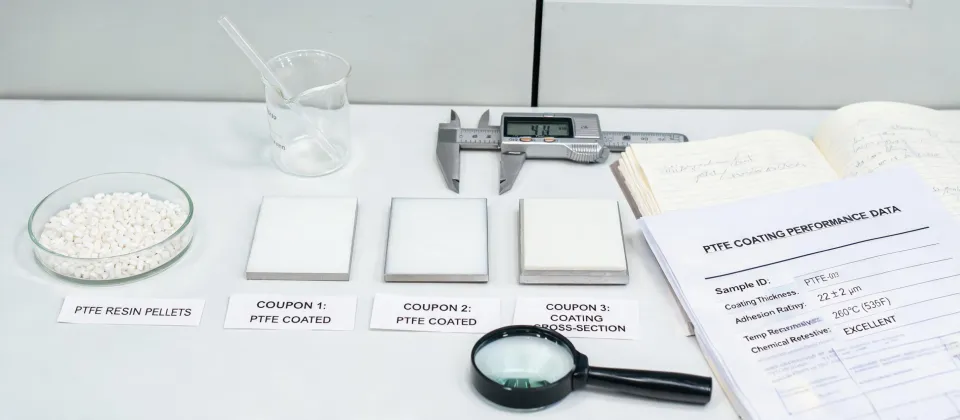
If you've been tasked with sourcing a fluoropolymer component—maybe a gasket, a liner, or a coating—you've probably hit a wall of technical terms. PTFE. PFA. FEP. Teflon™. The question I hear most often: "Is PTFE a fluoropolymer?"
Short answer: yes. But that's like asking if a sedan is a car. It doesn't tell you which one you need.
I started getting serious about this distinction back in early 2023 when I ordered PTFE sheets from a new vendor. The invoice said "PTFE," but the material didn't perform. My engineer flagged it immediately—different thermal stability. I assumed all PTFE was the same. That cost us a week of downtime and about $1,200 in rework.
So here's what I've learned the hard way. There's no universal answer. It depends entirely on what you're making and how it's used.
The Basics: What Makes a Fluoropolymer?
Fluoropolymers are plastics built around a carbon-fluorine bond. That bond is incredibly strong, which gives these materials their non-stick, chemical-resistant, and high-temperature properties. PTFE (polytetrafluoroethylene) is the most common type.
But within the PTFE family, there are major differences. Virgin PTFE, filled PTFE, reprocessed PTFE—each has different specs. And then you have the other fluoropolymers: PFA, FEP, ETFE, PVDF. Each one is built for a specific environment.
Here's a quick mental model: think of it like flooring. Vinyl works for bathrooms. Hardwood for living rooms. Carpet for bedrooms. Yes, they're all "flooring." But you wouldn't put carpet in a garage.
Scenario A: You Need High-Temperature Performance with Chemical Resistance
If your component will live in a chemical processing plant or a semiconductor fab, you're probably looking at PTFE or PFA.
PTFE handles continuous service up to about 260°C (500°F). That's hot. It's also nearly inert chemically—nothing sticks to it, and almost nothing corrodes it.
But PTFE has a catch: it doesn't melt like typical plastics. It's sintered, not injection molded. That limits its shapes. For complex geometries, PFA is often the better choice. It's melt-processable, so you can injection mold it, and it retains most of PTFE's chemical resistance. It costs more, roughly 20-40% more depending on the part complexity. Based on quotes I got in December 2024, a simple PTFE gasket might run $8-15. A PFA equivalent: $12-25.
So if you need high temperature + complex shape, go PFA. If the shape is simple and cost is the priority, PTFE will work.
Scenario B: Your Application Requires Electrical Insulation
PTFE is a fantastic electrical insulator. It has low dielectric constant and high dielectric strength. That's why you see it in wire coatings, cable insulation, and circuit board materials.
But for high-frequency applications, like RF connectors or microwave components, PTFE's thermal expansion can cause trouble. It expands more than most metals when heated. That can lead to mechanical stress in tight assemblies.
I had this issue in 2024 when sourcing PTFE standoffs for a telecom enclosure. The specs looked right, but during thermal cycling, the standoffs loosened. We switched to a glass-filled PTFE composite. The fillers reduced expansion. Cost increase was about 15%. But we eliminated the field failure risk.
If your application involves tight tolerances and temperature swings, filled PTFE or PEEK may be better than standard PTFE. Filled PTFE costs more per unit but saves on rework.
Scenario C: You Want Non-Stick Coating for Food Processing or Packaging
This is where Teflon™ enters the picture. Teflon™ is a brand of PTFE-based coatings developed by Chemours. It's applied as a liquid and then baked onto a metal substrate.
For food contact, US FDA regulations (21 CFR 177.1550) permit PTFE coatings for repeated use. But you need to verify the specific formulation. Not all PTFE coatings are food-safe. The binding agents and additives can differ.
I remember a client who ordered "non-stick" conveyor belts for a bakery. They picked a budget PTFE coating. Within two months, the coating started peeling. Turns out, the adhesive layer wasn't rated for the oven's peak temperature. They had to shut down for re-coating—lost a week of production.
For food processing, I recommend specifying Teflon™-brand coatings from a Chemours licensed applicator. You pay a small premium—maybe 10-15% over generic PTFE coating—but you get documented performance data and traceability. That traceability is critical for audits.
How to Figure Out Which Scenario Applies to Yours
Here's a simple checklist I use every time I evaluate a fluoropolymer request:
- Temperature range: Will the part see continuous heat above 200°C? If yes, PTFE or PFA. If below, FEP or PVDF may be cheaper options.
- Chemical exposure: Strong acids, bases, or solvents? PTFE or PFA. For mild chemicals, PVDF or ETFE could work and cost less.
- Mechanical load: Will the part bear weight or torque? Avoid pure PTFE—its creep resistance is poor. Use filled PTFE or a metal-reinforced design.
- Regulatory requirement: FDA, NSF, or UL listing required? This narrows your material choices significantly. Verify before ordering.
You don't need to become a materials scientist. But you do need to ask these four questions. Talk to your engineer or the supplier's technical team. Most reputable suppliers can walk you through the basics—they want you to get it right.
A quick note on suppliers: Chemours is the original developer of Teflon™, so their product data is extensive. You can find technical datasheets on their site. For application-specific advice (like coatings vs. machined parts vs. extrusions), talk directly to a Chemours authorized distributor. They'll steer you based on your volume and tolerance requirements.
One more thing: if you're ordering small quantities—under 50 units of a custom part—expect some pushback from suppliers on setup costs. That's normal. But don't accept poor specs just to save on the first order. Get the material right from the start. The cost of a failure later is always higher.
I'm still learning, honestly. Every new application brings a new question. But going through this checklist has saved me from repeating the PTFE sheet mistake of 2023. Hopefully, it saves you the same headache.
