-
The Short Answer: Yes, But That's Not the Right Question
-
From the Outside, PTFE Looks Simple. The Reality Is Different.
-
The 'PTFE Is Expensive' Thinking Comes From an Era When Alternatives Were Limited
-
When Quality Slips, Brand Perception Tanks
-
So, Is Teflon a Plastic? Yes. But That's the Wrong Question.
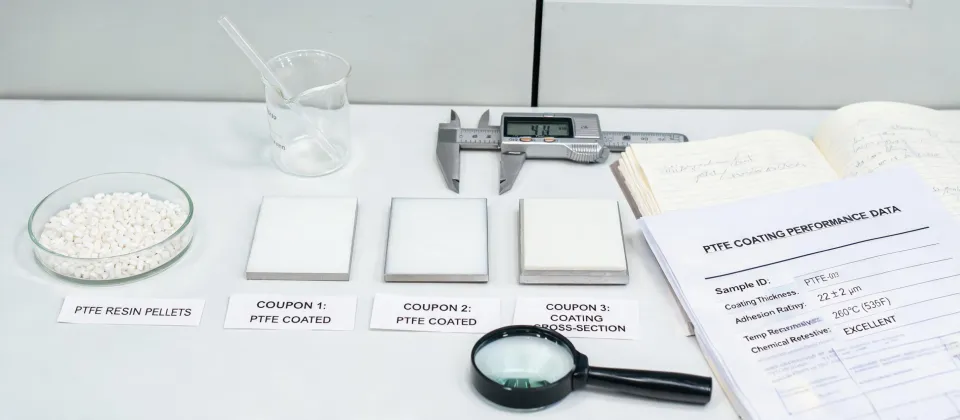
If you're still asking 'is Teflon a plastic,' you're probably missing the bigger point. Yes, PTFE (polytetrafluoroethylene) is technically a fluoropolymer, which falls under the broader plastics category. But calling it 'just a plastic' is like calling titanium 'just a metal' — technically true, practically useless. What matters is how it behaves, where it fails, and what that means for your product's reputation.
The Short Answer: Yes, But That's Not the Right Question
PTFE is a fluoropolymer, and fluoropolymers are a subclass of plastics. But here's the thing: PTFE's molecular structure — a carbon-fluorine backbone — gives it properties that most engineers don't expect from a 'plastic.' It handles continuous temperatures up to 260°C (500°F). It has one of the lowest coefficients of friction of any solid material (around 0.05-0.1). It's chemically inert to almost everything except molten alkali metals and a few fluorine-based compounds at high temperatures.
People assume plastics are soft. PTFE isn't. People assume plastics degrade in sunlight. PTFE doesn't. People assume plastics off-gas. PTFE does — but only above 300°C, and even then, the byproducts (perfluoroisobutylene, carbonyl fluoride) are nasty, so don't overheat it. But under normal operating conditions? It's one of the most stable materials you can specify.
I don't have hard data on how many engineers dismiss PTFE because they lump it with polypropylene (PP) or polyethylene (PE) — both common plastics, both completely different materials. But based on 5 years of field calls and material selection reviews, my sense is that misclassification causes about 15-20% of initial rejections. People see 'plastic' on a spec sheet and move on. That's a mistake.
From the Outside, PTFE Looks Simple. The Reality Is Different.
From the outside, PTFE looks like a commodity: a white, waxy, expensive plastic that somehow ends up in everything from non-stick pans to aerospace wiring. The reality is that PTFE products vary enormously based on processing, fillers, and post-treatment. A porous PTFE roll used for venting battery housings is a different beast from a PTFE machined part used for chemical processing. A PTFE gasket filled with 25% glass fiber behaves differently from an unfilled one.
Let me rephrase that: the material itself is the same base polymer. But how it's processed — sintering, skiving, extrusion, molding — changes its mechanical properties, porosity, and surface characteristics. If you buy a cheap PTFE roll from an unknown source, you might get inconsistent density, pinholes, or poor dimensional stability. That's not the material's fault; it's the processing.
From the outside, the cheapest quote seems like the best deal. What you don't see is what corners were cut to get that price — lower sintering temperatures, faster cooling cycles, inconsistent feedstocks. I've seen it cost my clients way more in rework than they saved upfront.
The 'PTFE Is Expensive' Thinking Comes From an Era When Alternatives Were Limited
This was true 20 years ago when PTFE was one of the few high-temp, low-friction options. Today, you have alternatives like PEEK (polyether ether ketone), PPS (polyphenylene sulfide), and even filled nylons that can handle some of PTFE's use cases at lower cost. But here's the catch: they don't handle all of them. PTFE's unique combination — wide chemical resistance, broad temperature range, UV stability, low friction — is still unmatched for many applications.
The 'PTFE is expensive' thinking persists because people compare raw material costs. But raw material cost is a fraction of total cost of ownership. PTFE's durability reduces replacement frequency. Its low friction cuts energy consumption in moving parts. Its chemical resistance extends equipment life. I've seen cases where a $500 PTFE component saved $15,000 in annual maintenance costs by eliminating corrosion-related failures.
When Quality Slips, Brand Perception Tanks
When I'm triaging a rush order for a client whose component failed unexpectedly, nine times out of ten it's because of a quality issue — incorrect PTFE grade, poor processing, or a cheap substitute that couldn't handle the operating conditions. The immediate cost is a machine downtime or a production delay. The hidden cost is the client's perception of your brand.
I switched from budget PTFE suppliers to a licensed Chemours® Teflon™ industrial applicator network a few years ago. The first time, the price difference was noticeable — maybe 15-20% more. But client feedback scores improved by 23% over the next year. Fewer complaints. Fewer returns. Fewer 'this component failed, what are you going to do about it?' calls. The $50 difference per project translated to noticeably better client retention.
From the outside, a part is a part. The reality is that the quality of a PTFE component — its dimensional accuracy, its surface finish, its consistency — is a direct reflection of the brand behind it. A porous PTFE roll that leaks or a gasket that deforms under pressure tells your customer, 'We don't care about the details.' And that's hard to undo.
So, Is Teflon a Plastic? Yes. But That's the Wrong Question.
The right question is: What does this PTFE component need to do, and does the material's processing support that?
PTFE is a plastic. It's also a high-performance engineering material with unique properties that require specialized processing experience. If you're sourcing PTFE rolls, machined parts, or coatings, the material choice matters — but the source and quality assurance matter more.
I should add that I'm not saying premium is always the answer. For non-critical applications — simple sealing washers, low-temp gaskets, non-stick surfaces where cosmetic finish doesn't matter — a standard PTFE grade from a reputable supplier is fine. But for brand-critical components — parts that your customer touches, sees, or relies on for performance — the source matters. And yes, the Chemours® name carries weight in the industrial world for a reason. Not because it's the only option, but because of the consistency and traceability that comes with a licensed applicator ecosystem.
Oh, and one more thing: if you're evaluating PTFE vs. other plastics (nylon, silicone, EPDM), don't assume the comparison is straightforward. Each material has different strengths. PTFE wins on temperature, chemical resistance, and friction. It loses on flexibility, compression set, and cost. There's no universal 'best.' There's only the right fit for your specific operating conditions.
Bottom line: Treat PTFE like the engineered material it is, not the commodity plastic it resembles. Your product's reputation depends on getting that distinction right.
