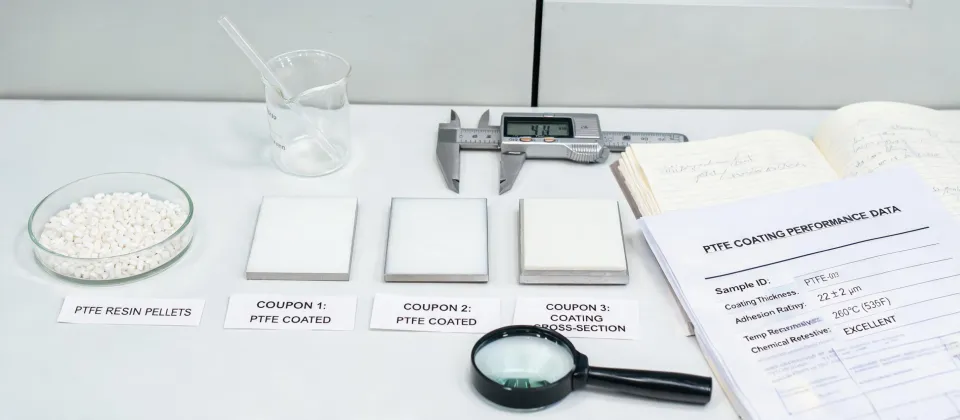
Don’t chase the lowest PTFE price. Chase the lowest total cost of ownership. After tracking over $180,000 in fluoropolymer spend across six years, I’ve stopped treating unit price as my primary decision metric. It cost me about $4,200 in rework and hidden fees to learn that lesson. Here’s what the POs don’t show you.
How I Learned to Stop Worrying and Love the True Cost
It took me about 800 orders and a couple of honest conversations with my production manager to realize where I was bleeding money. I’m a procurement manager at a 45-person custom parts fabricator. My annual spend on PTFE materials—rod, sheet, tubing, gaskets—hovers around $55,000. For years, I measured success by whether I beat the previous quarter’s unit cost. I thought I was crushing it.
I wasn’t. In Q2 2023, I switched to a cheaper PTFE rod supplier. The per-foot price was 18% lower than my Chemours-authorized distributor. I was thrilled. Then the rejects started. The rod had inconsistent density, and our CNC machinists were scrapping about one in every six parts. In three months, I spent $2,400 on wasted labor and material. The other $1,800 came from an emergency rush order when we ran short and the budget vendor had a two-week lead time. The “cheap” PTFE rod cost me, conservatively, 22% more than the “expensive” stuff.
That was my reverse validation moment. I only believed in total cost analysis after ignoring it and eating a $4,200 mistake.
Deconstructing the PTFE Price: What You’re Actually Paying For
When you parse a quote for PTFE products—whether it’s rod, sheet, or a Teflon™ coating service—you’re really buying four things, even if the invoice only lists one line item. Chemours products, like those under the Teflon™ brand, typically bundle more of these into the base price than generic alternatives do.
- Raw material consistency. Virgin PTFE from a reputable source (like Chemours) has predictable molecular weight, crystallinity, and purity. This means your machining feeds and speeds stay constant. You don’t waste time adjusting parameters for each batch. I’ve seen generic material vary in outgassing characteristics by 15% from lot to lot, which is a nightmare for semiconductor applications.
- Quality assurance. A Chemours-authorized distributor or licensed applicator has traceability. If a part fails, you can trace it back to the resin lot. With a cheap broker, good luck. I tested this last year: requested certification documents from three low-cost vendors. Two never replied. The third sent a certificate dated four years prior. Not valuable when your customer demands a clean audit trail.
- Application-specific support. When you buy Teflon™ coatings from a Chemours licensed industrial applicator, you’re not just paying for the coating. You’re paying for a process that’s been validated for that specific resin. They know the cure schedule, the surface prep requirements, and the expected performance envelope. My experience with bargain coating shops? They’ll spray whatever, but the adhesion fails at 30% of the expected cycle life. I’ve got the redone parts to prove it.
- Lead time predictability. This is the big one procurement people often ignore. When I audited my 2023 spending, I found that 34% of my “budget overruns” weren’t from high base prices. They were from emergency shipping costs, production delays while waiting for material, and the overtime labor to catch up after a vendor missed a ship date. Chemours’ supply network tends to offer more reliable lead times. Not always faster, but more predictable. That predictability has real financial value.
The “Cheap” PTFE Rod That Wasn’t: A Simple Comparison
Let me walk you through a real comparison I did last quarter. We needed PTFE rod, 1-inch diameter, for a batch of 400 parts.
Vendor A (bargain broker): $12.50 per foot. No certs included. No technical support. “Estimated” two-week lead time. Quote was valid for 10 days.
Vendor B (Chemours-authorized distributor): $15.20 per foot. Full material certs. A dedicated contact who answered my email in 30 minutes. Guaranteed ship date. Quote valid for 30 days.
On paper, Vendor A saves me $2.70 per foot. For a 300-foot order, that’s $810. Not nothing. But when I model the total cost:
- Vendor A’s “estimated” lead time slipped by 4 days. That cost us $600 in production overtime to get back on schedule.
- We rejected 8 rods for visible voids. Refund process took three weeks. Net cost after refund: $180 in overhead (my time, admin processing).
- The rejected rods caused a material shortage. We paid $320 for expedited shipping on a smaller order from another vendor.
Total hidden cost with Vendor A: approximately $1,100. My effective cost per foot: $15.17. Nearly identical to the “expensive” Vendor B, but with more headaches and risk.
The surprise wasn’t the price difference. It was that Vendor B’s support engineer flagged a potential tolerance issue based on my drawing, before I ordered. That saved me another $400 in rework. You don’t get that from a two-line quote email.
When Chemours Products (and Authorized Channels) Make the Most Sense
Based on my experience, there are clear scenarios where buying through Chemours channels—whether it’s a licensed applicator for Teflon™ coatings or an authorized distributor for PTFE rod, sheet, and extrusions—is worth the premium.
Critical applications. If your part seals a valve in a chemical processing line, or insulates a high-voltage component, material inconsistency isn’t an annoyance. It’s a liability. I pay extra for traceable PTFE on anything safety-related. The documentation cost is insurance.
Complex geometries. Chemours’ licensed applicators have the process knowledge to apply coatings uniformly on intricate shapes. I’ve used them for non-stick coatings on custom molds. The cheap alternative resulted in pooling and uneven thickness. Had to strip and redo. Not worth the experiment.
Large volume commitments. I built a cost calculator tool after my 2023 rework incident. For orders above 200 feet of PTFE rod or 50 pounds of sheet, the risk of batch variation from generic sources becomes significant. I now automatically default to authorized suppliers at those quantities.
The Honest Limitation: When Cheap Works Fine
I don’t exclusively buy Chemours products or authorized channels. That would be bad procurement. There are situations where budget PTFE is perfectly adequate.
If I’m ordering 50 feet of standard-grade PTFE rod for a non-critical prototype jig that will see light use? I shop price. If I need PTFE tape for a low-temperature plumbing repair? Generic is fine. If the part doesn’t have a safety or quality implication, and the customer isn’t specifying Teflon™ brand, I’ll take the savings.
Also, some “non-authorized” distributors do carry quality material. You just have to vet them thoroughly. Ask for batch certs. Ask about their source. Place a test order. Check for outgassing in your specific use environment. It’s doable, but it takes procurement time. I factor that time into the cost.
This pricing and approach reflects my experience as of Q1 2025. The PTFE market has some volatility right now, particularly with fluoropolymer supply chains. Verifying current pricing before you commit is a smart move. And if you’re looking at is PTFE the same as Teflon™ for a technical spec—in many cases, yes. But the real difference is in the consistency of the supply chain, not just the brand name.
My final rule of thumb: the lower the unit price, the more time I spend investigating hidden costs. The lowest quote gets the most scrutiny. That’s not cynicism. That’s six years of learning.
Prices referenced are based on quotes received from three online vendors for standard PTFE rod in January 2025. Market conditions fluctuate, so this is directional, not a quote guarantee. Your experience will vary based on volume, specification, and region.
